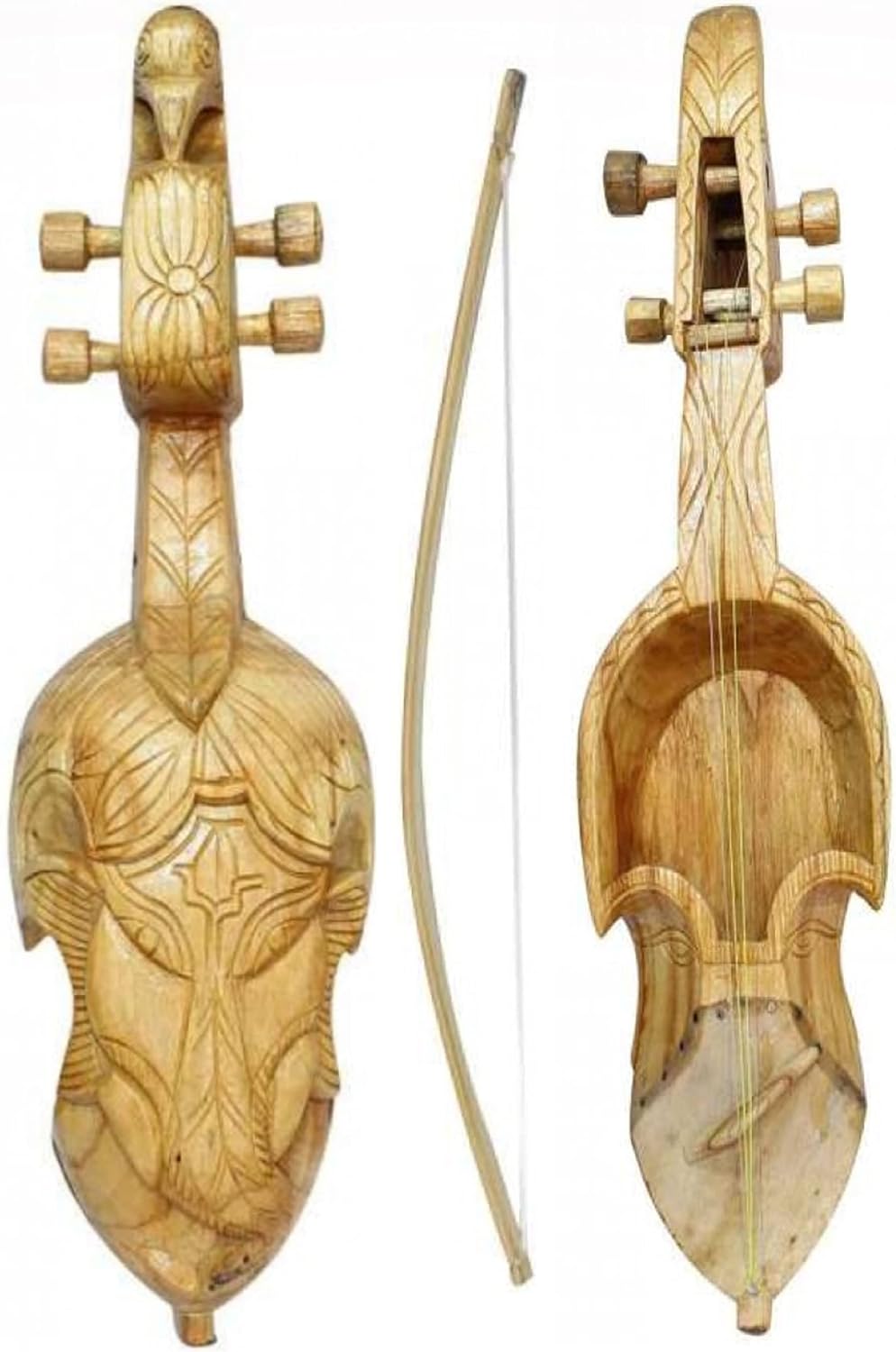
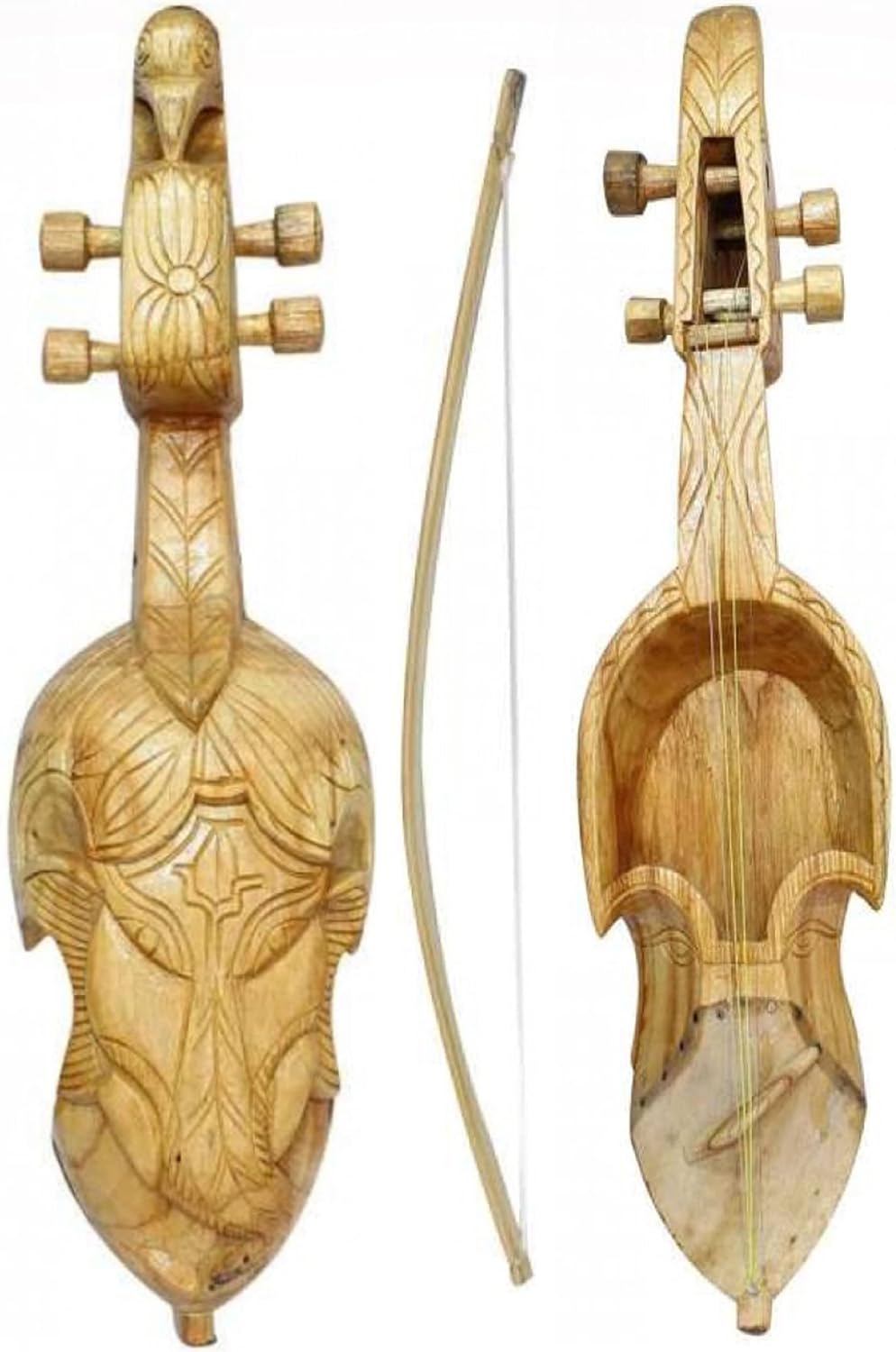
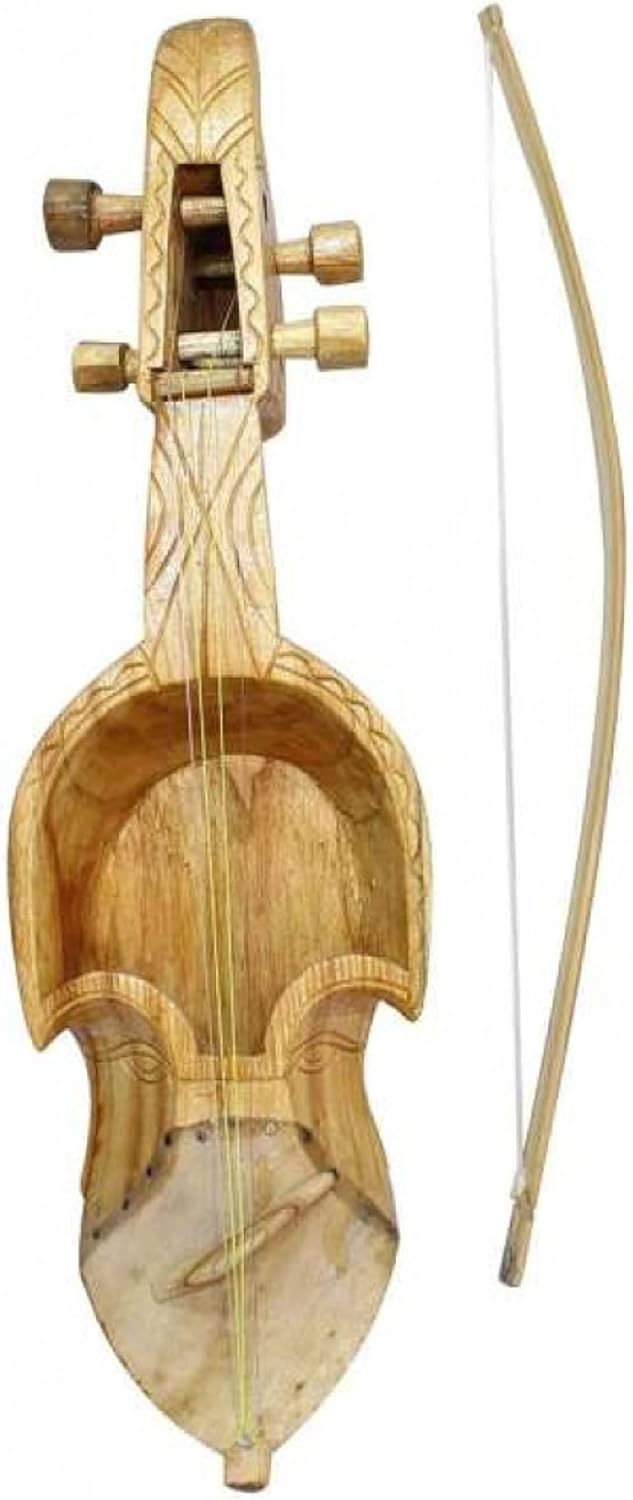
Sarangi Traditional Hand Carved Nepali Folk Musical Instrument Violin For Live Play Gaine Sarangi 21 IN Large - Great For Playing Live Professionals, Learn Music & Decorations
The soaring mountains of the Himalayas are covered in trees that seem to touch the clouds, and mountain goats are abundantl
-
Detail
This sarangi has special Hand carved Shape of lord Ganesh. He is the god of wisdom and learning, as well as the remover of obstacles, and consequently the sign of auspiciousness.. Traditional Nepali Sarangi is made up of a single piece of wood. Having a neck and hollowed-out double-chambered body, they are often made from woods of trees. While the upper chamber is left open, the lower opening. The neck is fretless, and the strings are tied upon and tuned with the tuning pegs. The size of Sarangi differs according to the players' preference... The Nepali Sarangi consists of Three or four strings. The original strings were made up of sheep intestine, similar to the use of catgut (made from the intestines of cattle) in many musical traditions around the world. The Gandharba received intestines of sheep sacrificed during major festivals like Dashain, which they left in a pot for some days. Once the entrails was fully rotten, it was pulled out, leaving behind the fine nerves of the intestine in the pot. These were then woven to make strings. However these days, badminton strings, nylon and steel strings have generally replaced gut strings. The bow was traditionally strung with horse tail-hair, but, in the modern days, nylon bowstrings are common.
-
Customer ReviewsNo comments